Here are the notes that supported my work and the process during Unit 1


Wilson, Amrit. Finding a Voice: Asian Women in Britain. Virago Press, 1982.

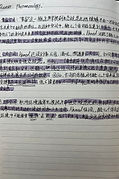
1. Family space: The concept of “family” is often understood in a heteronormative way as a unit consisting of a heterosexual couple and their children. Queer individuals may feel out of place in such spaces, especially when their identities fit into this traditional concept. Ahmed discusses how queer people can only challenge and change this understanding of space by redefining or reorganizing the concept of family. 2. Public space: Ahmed also talks about how public spaces such as parks, bars, and streets often implicitly or directly reflect heteronormative norms. For example, a straight couple holding hands may feel comfortable and safe upstairs, but a queer fat couple doing the same thing may be stared at, looked at strangely, or even openly deliberately. As a result, the experience of space becomes complex and challenging for queer individuals, who need to develop different navigation strategies to protect their sense of space and safety. 3. Workspace: The workplace environment is also often seen as heteronormative and normative, especially when it comes to interactions between colleagues such as talking about private lives. Akmed emphasizes that queer individuals in these environments may need to “mask” or “filter” their lives to fit into their expectations and norms. Sarah Ahmed explores how emotions are social and cultural practices that shape the world and our interactions within it. She argues that emotions, far from being private experiences, are deeply embedded in social and political contexts. お Ahmed challenges the idea that emotions are purely personal or internal. Instead, she argues that emotions are shaped by social contexts and play a key role in forming identities and politics.
Sara Ahmed

1. Feminism in daily life: Ahmad pointed out that feminism is not limited to theory or political activities, it exists in every corner of daily life. She emphasized that feminists must persist in speaking out and fighting against these injustices, and this kind of struggle itself is a feminist practice. 2. "Sensitivity" and feminism: Ahmad mentioned the importance of emotions in feminism. The book cited the uneasiness and anger felt by some women at work after experiencing gender discrimination, emphasizing that these emotions are not human weaknesses, but an important driving force for social change. She believes that recognizing and expressing these emotions is part of feminism because they reveal the true face of inequality. 3. Inclusiveness and diversity: The book mentions that in the feminist movement, attention must be paid to the experiences of different women, including factors such as race, class and sexual orientation. 4. Education and awareness raising: Through education, students can better understand gender inequality and realize their role in this issue. 5. Body politics: Ahmad also explored the relationship between body and power. Discussed how society maintains power structures by regulating women's bodies. She believes that recognizing the politics of the body is a challenge that feminists must face.
Ahmed, Sara. Queer Phenomenology: Orientations, Objects, Others. Duke University Press, 2006.
Reading Notes


Auto Theory (Automatic Theory). She 2>, is a new style of writing that integrates personal writing into theoretical analysis, commonly seen in fields such as feminism and additive theory. It uses the elements of someone's suggestion plus confidence, and the theory of God's secrets has applications and influences in daily life. This writing style blurs the boundaries of academic discourse and experience, emphasizing the subjectivity and concreteness of theory. 1. The integration of theory and personal experience. → The author often uses personal experience as a starting point for theoretical discussion, allowing readers to understand abstract theories from real life. This method not only gives the theory a more intuitive appearance, but also enables readers to feel the practical significance of the theory through specific examples. 2. Challenge traditional academic boundaries. "Traditional academic writing tends to remain objective and neutral, but autotheory breaks this boundary and advocates the importance of subjectivity. By integrating subjective perspectives, autotheory works seek more realistic and multidimensional theoretical understanding. 3. Social and cultural criticism: > With personal stories, autotheory is able to critique and analyze social structures, cultural norms, and issues such as gender and identity in more depth. Through specific life examples, it analyzes complex issues such as gender inequality, identity politics, and cultural oppression.
1920s. ·Immigration experience. ·Gender roles. ·Racial discrimination and marginalization ·Labor and economic independence. ·Social and political activities →Cultural conflict and generational differences in immigrant experience: Many immigrant women not only face external cultural conflicts in the process of adapting to the new society, but also need to deal with generational differences with their families. The younger generation is usually more adaptable to Western culture, which may cause tension between them and their parents who hold traditional values. Wilson describes the difficulties these women encounter in education and career choices, and how they find a balance between respecting the old culture and integrating into the new culture. >Economic pressure and independence: Economic pressure in the immigration context is a common problem. Many women in the UK need employment to help their family finances, but are often only able to work in low-paid, low-status jobs. These positions are sometimes not matched with their professional qualifications and skills because their education or experience may not be recognized. In addition, economic needs sometimes force women to make difficult choices between family obligations and work, which further limits their personal development space. 4 Rebuilding community and identity: Faced with marginalization and marginalization in mainstream society, many Asian women seek a sense of belonging and support system by rebuilding their own community networks. Wilson cited some examples showing that women have created a space to preserve their cultural identity and gradually accept new social values through cultural groups, religious gatherings or support groups. How to find a balance between respecting the old culture and entering the new culture? -Cultural expectations and educational choices. -Gender role challenges: -Balancing the old culture and the new culture: 2↳ Wilson shares some strategies women have adopted for careers, such as adhering to traditional customs and language at home, while adapting to Western cultural norms and communication styles in the workplace. This dual life requires keen cultural adaptability. -Community support and personal development: -Reconciling generational differences "Actively communicate with family members and try to gain understanding and support. Through such efforts, many women are able to achieve self-worth and career success while maintaining cultural identity.
Dealing with racial bias:
The book also highlights the racial bias that Asian women encounter in public and service settings.
They often need additional human, intellectual, and emotional resources to deal with these setbacks. Wilson documents the positive ways many women deal with these challenges, such as improving their social status by improving their educational background, or participating in protests and advocacy work to fight for greater social justice and racial equality.
Ahmed, Sara. Living a Feminist Life. Duke University Press, 2017.


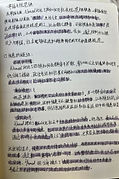

The role of language 1. Shaping emotions through speech: Ahmed points out that language influences the release and flow of emotions through narrative rhetorical strategies. For example, in political speeches, specific words and stories are used to arouse collective fear or anger, thereby prompting the public to support certain policies or positions. 2. Hostile language: She explores how hate speech or fear rhetoric alienates or stigmatizes certain groups through the repeated use of specific descriptions and frames. For example, calling an ethnic or social group a "threat" or "invader" not only arouses negative emotions, but also creates oppositional relationships in society. 3. The construction of "us" and "them": Language is often used to divide "us" plus "them" and deepen emotional differences through this binary opposition. Ahmed discusses how this distinction is used in political discourse to create a sense of belonging or alienation, thereby consolidating the cohesion of the in-group and the marginalization of the out-group. 4. Naming and identifying emotions: By naming emotions in language (e.g., “angry crowds” or “fearful citizens”), the nature and direction of emotions in discussions and exchanges are determined and legitimized. This not only affects how individuals identify their own emotions, but also how society views and responds to these emotions. Page 2: 1. Social Construction of Emotions: Ahmed emphasizes that emotions are not purely individual experiences, but are constructed through social interactions and cultural narratives. She argues that emotions, encoded in culture, are associated with success in some ways, while in other cases they may be associated with compliance and obedience. 2. The interconnectedness of emotions: She proposes that emotions spread in society through interpersonal and group relationships. This means that one person's emotions and state may affect others, and this process is reflected and amplified in the wider social environment. For example, the fear and emotions of a group may spread rapidly through the media and social networks, affecting public opinion and social policies. . 3. Emotions and Power Dynamics: Ahmed explores how emotions are used to maintain power structures and social hierarchies. She points out that certain emotions and fear and hatred are often used as tools to control and marginalize specific groups. By instilling these emotions, society is able to maintain and reproduce unequal power relations. · Fear and Othering: Ahmed explores how fear is used as a tool to control and exclude "others", such as immigrants, Muslims or other marginalized groups. Fear is often used in public discourse to inspire hostility towards these groups, increase distrust, and justify discriminatory policies and practices. By portraying these groups as threats, dominant groups are able to reinforce social boundaries and maintain existing power structures. · Disgust and marginalization: Ahmed, analyzes how disgust is mobilized to support social exclusion. She points out that certain bodies or behaviors are visually labeled as "disgusting", which helps maintain moral and social order. By showing disgust towards certain groups, society can justify inequality and marginalization. Enough Sarah Social Rooted Emotion Page 3: Happiness and Normativity: In terms of happiness, Ahmed discusses how it is linked to social norms. Happiness is often used to promote certain "ideal" lifestyles, such as heterosexual marriage and childbearing. This means that people who deviate from these norms, such as the elderly, may be seen as "unruly" or "abnormal", and face social pressure and marginalization. Therefore, by controlling what is defined as happiness, society is able to promote and maintain specific cultural and moral norms. The Magnetism of Emotions: ·The Spread of Fear: Ahmed discusses how fear spreads among groups, affecting public perceptions and behavior. She analyzes how the media, political rhetoric, and social networks can amplify fear, especially when it comes to social issues such as immigration and terrorism. ·Collective Anger: She also mentions that collective anger can be a driving force for social change. When a group is angry about injustice or oppression, this emotion can unite and mobilize the group, thereby promoting protests, rights movements, and social reforms. Examples include emotional mobilization in protest movements and social movements. ·Resonance of Love Ahmed explores how love and how it generates solidarity and identity in communities. She argues that love is not only an emotion in private relationships, but can also play a moderating role in broader social relationships, connecting people through resonance and caring, especially in marginalized groups. These examples show that emotions are not just internal experiences of individuals, but phenomena that circulate and amplify in society, shaping social dynamics by influencing collective practices and behaviors. Ahmed's analysis reveals how emotions generate meaning in interpersonal interactions and influence broader political and cultural environments through social structures. Page 4: 4. Positioning and flow of regret. · Emotional attachment: Ahmed proposed that emotions are not free-floating, but attached to a specific "body" or "other". For example, in some fear events in Western society, the Muslim group is often regarded as the embodiment of "terrorism". Such emotional positioning attaches fear to specific ethnic or religious groups, making the ethnic group the focus of social fear. · Immigration and Threat: Ahmed discussed how immigrants are often portrayed as social and economic threats, and such descriptions focus disgust and fear on immigrant groups. By repeatedly emphasizing this point in business, media and political discourse, these emotions flow not only between individuals, but also in cultural symbols and social discourse. · Perceived body and emotion: She analyzed how perception can trigger specific emotions. For example, in the process of contact with "alien" bodies, the disgust or discomfort that may arise further consolidates social exclusion. The emotions here flow not only between individuals, but also in cultural symbols and social discourse. · Emotional management of the state: Ahmed also proposed how the state can maintain its power by manipulating emotions. For example: through national rituals, speeches and policies, the state can closely follow patriotic emotions with symbols such as the national flag and the land, The public leads to a sense of collective identity and loyalty in the hearts of citizens. These analyses emphasize that the flow of emotions does not occur naturally, but is guided and managed through social and political forces. This makes “incorrect women
Ahmed, Sara. Emotions as Social and Cultural Practices. SAGE Publications, 2014.
About Composition and Painting Techniques


Presence) “I like to think of the work of an artist as a difficult matter of organizing information. What I mean by that is how do we transform difficult or intangible concepts or information into experiences that invite the viewer to understand something, whether it be emotionally or intellectually” “Using only line, texture, and variations in color, we skillfully create multiple identities. Our use of color, form, space, tone, texture, all of which elicits a difficult response from the viewer.” · It’s really useful to understand how people respond to different visual stimuli. ” · Light and shadow (the shaping of characters from the perspective of light and shadow) “It takes a lot of entanglement to create a sense of indeterminacy. Aw Anwesenheit: Directness, unobstructedness, and openness. A woman discusses,

Emin, Tracey. The Mother. 2022. Bronze, 9 meters tall, MUNCH Museum, Oslo, Norway.
(‘The Mother’ being assembled in Oslo Photo: Ingvild B. Myklebust Courtesy: Agency of culture affairs, City of Oslo)

Patel Raksha. Landowner.
Oil on canvas, 66 x 76cm, 2023

Emin focuses on motherhood, intending to express respect and commemorate the image of the mother. He often combines personal experience with a wide range of emotional experiences to enhance the universality of his works, evoking the viewer's thinking about the role of mother. - Although the specific performance of motherhood may be related to her personal experience and emotions, in public presentation, this performance tends to be a universal emotional exploration, focusing on the significance of the mother's role in personal growth and society. . 1. Culture and identity. Patel's work reflects her personal identity as a meeting point of British and Indian culture. Her works often explore the complexity of cultural identity and the individual's position in a multicultural environment. 2. History and memory: Her work also focuses on how historical narratives and memories shape individual and collective identities. Through visual expression, Patel reflects on the impact of family historical events on individual lives. . 3. Visual Layering National Festival Patel's artistic style focuses on details and layers. She often uses rich colors and textures in her works to create a complex visual experience, allowing viewers to feel the profound connotation of the work in a close experience.
Process


I will force myself to use large brushes to help me control the overall composition of the painting. At the same time, the strokes from large brushes also convey a very strong emotional expression.
During my painting sessions in the studio, I often drink to help relax my tense emotions, but I’m not an alcoholic. Honestly, I frequently struggle to maintain my confidence, as my mind habitually cycles through too many thoughts. However, overthinking only makes me more anxious. While I crave perfection, this mindset contributes to my tension and lack of confidence during the creative process. For me, if I want to convey emotions through my brush, I need to be sufficiently relaxed and not overthink things. I have to continually ask myself the same question, and it is through this repetitive self-inquiry that I can express my own "language."